

Two Piece Full Port Threaded Ball Valves

Browse our selection of 2 piece full port stainless steel ball valves (also known as 2 piece ball valves) with female NPT threaded connections. These two-way quarter-turn ball valves are available in 304 stainless steel and 316 stainless steel and are offered in both compact and heavy-duty designs. All models feature a full port bore for maximum flow and are rated to 1000 WOG, with high-pressure options available at 2000 WOG and 3000 WOG.

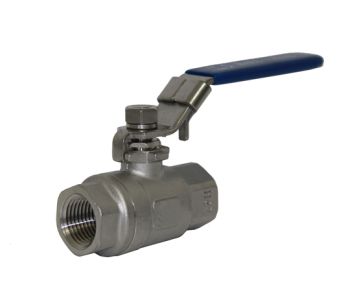 2 Piece Full Port Ball Valves - 316 Stainless Steel
Starting at $10.46
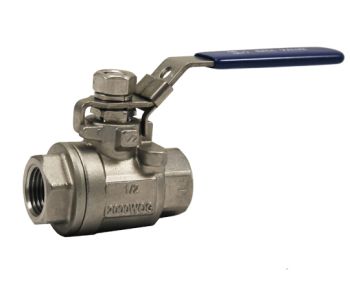
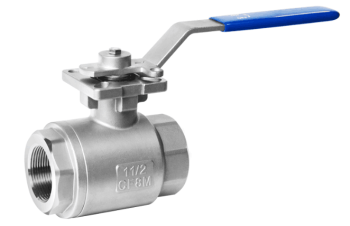
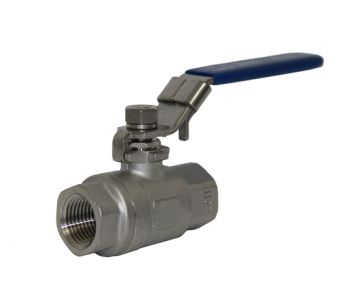
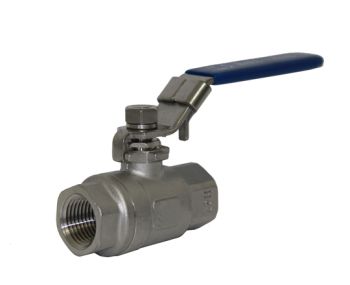
2 Piece Stainless Steel Ball Valves – Overview
Two piece ball valves are the most commonly used stainless steel threaded ball valve type because they offer an ideal combination of durability, performance, and cost-efficiency. They are widely selected as the standard solution for applications requiring reliable shut-off and full port flow without the complexity of multi-piece valve designs.
Available in standard 1000 WOG and higher pressure ratings such as 2000 PSI (WOG) and 3000 PSI (WOG), these valves are suitable for a wide range of industrial, commercial, and fluid handling systems.
Two Piece Full Port Threaded Ball Valves
Two piece full port threaded ball valves are among the most widely used valve types for reliable shut-off and high-flow performance in piping systems. These full port ball valves feature female NPT threaded connections and are commonly referred to as NPT ball valves. They are widely used in industrial, commercial, and general fluid control applications. This section explains how these valves work, where they are used, and why they are a popular choice for fluid-handling systems.
Available in sizes from 1/4" to 4" with options in 304 and 316 stainless steel.
Key Features of Two Piece Ball Valves
- Full Port Design: Keeps the internal bore aligned with the pipe diameter, helping maintain flow efficiency and limiting unnecessary pressure loss through the system.
- Threaded NPT Connections: Enables straightforward installation and removal without the need for welding or specialized fittings.
- Quarter-Turn Operation: Opens or closes the valve quickly with a simple 90-degree handle rotation.
- 1000 WOG Rating: Built to handle water, oil, and gas applications under standard operating pressures.
- Two Piece Body Construction: Allows the valve to be disassembled for cleaning, inspection, or seat replacement when required.
- 304 & 316 Stainless Steel Options: Provides durability and corrosion resistance for a wide range of operating environments.
Specifications
- Connection Type: Female NPT threaded
- Port Type: Full port (full bore)
- Pressure Rating: 1000 WOG (higher pressure options available)
- Materials: 304 and 316 stainless steel
- Operation: Quarter-turn manual handle
- Valve Type: Two-way ball valve
Need help selecting the right valve? Contact our team for assistance with sizing, pressure ratings, and material selection.
What are Two Piece Ball Valves?
Two piece stainless steel ball valves are among the most widely used full port threaded ball valves, designed for two-way shut-off control with minimal pressure drop and maximum flow capacity. They are constructed from two body components that are threaded together. One of these parts is the body, which houses the ball and internal parts and has one end connection, and the second piece includes the other end connection. Due to this two piece design, the body can be assembled after the ball has been placed inside the valve. One advantage of this construction is that a larger ball can be used during manufacturing. A larger ball allows for a larger bore or internal hole in the ball, and a larger bore results in a full port flow path. This means that the internal diameter of the valve matches the pipeline diameter, which minimizes flow restriction. A one-piece valve has a smaller body, and the internal ball has to be installed through one of the threaded end connections. This requires a smaller ball, which in turn necessitates a smaller bore, resulting in a reduced port valve. For a detailed comparison of flow characteristics, see our Full Port Ball Valve vs Standard Port guide.
Another advantage of the 2-piece design is that it can be opened to be cleaned or repaired, which most often involves seat replacement. For guidance on servicing valve seats, seals, and other internal components, see our Ball Valve Repair and Maintenance guide.
Ball Valve Body Types
Stainless steel ball valves are commonly manufactured in one-piece, two-piece, and three-piece body designs. Each construction type offers different advantages depending on the application, flow requirements, and maintenance needs.
- 1 Piece Stainless Steel Ball Valves – compact valves with a single-piece body design and reduced leak paths.
- 2 Piece Full Port Ball Valves – durable two-body construction with full port flow capacity.
- 3 Piece Stainless Steel Ball Valves – designed for easy maintenance and servicing in industrial piping systems.
How do Two Piece Ball Valves work?
The valve is operated with a 90-degree rotation (quarter-turn), which is why these are commonly referred to as quarter-turn ball valves. The handle is connected to the internal ball via the valve stem. When the handle is in line with the pipe, the valve is on, and flow is allowed; when the handle is at a 90-degree angle to the pipe, the valve is off, and flow is stopped. Learn more about quarter-turn valve operation in our What is a Ball Valve? guide.
The two body sections can be unscrewed and separated to expose the internal components for cleaning and repair. The most common procedure is to replace the seats. While the valve can be disassembled for maintenance, this process requires proper handling and is not typically performed in standard applications, where replacement is often the more practical solution.
What are Two Piece Ball Valves Used For?
Two piece ball valves are used to control the flow of fluids in a wide array of applications. They are primarily used for their on-off function; however, they are sometimes also used for throttling, which is a way to control the flow rate by partially opening the valve. They are not designed for throttling, and it can lead to additional wear and tear in certain applications. They are reliable, durable, and easy to use, and for these reasons, they are used in a wide array of applications, including industrial, commercial, and residential. They are full-port ball valves, which makes them suitable for applications that require a minimal pressure drop and where a high flow rate is important. For industry-specific examples, see our Ball Valve Applications guide.
Common Applications
- Water and plumbing systems
- Oil and gas pipelines
- Compressed air systems
- Chemical processing
- Industrial fluid control systems
- Commercial and residential piping
Why Choose a Two Piece Ball Valve
Two piece ball valves are widely selected for their reliability, ease of use, and cost-efficiency. Their simple two-body construction provides a durable solution for general-purpose shut-off applications, making them a practical choice for a wide range of industrial and commercial systems.
- Cost-effective compared to three-piece valves
- Full port design supports high flow rates
- Compact design fits into tighter installations
- Reliable shut-off performance
- Suitable for a wide range of general applications
How to Choose the Right Two Piece Ball Valve
When selecting the correct 2-piece ball valve for an application, the main factors to consider are the material grade, flow rate, and pressure rating. For general applications, 304 stainless steel is often sufficient, while 316 stainless steel is better suited for more corrosive or demanding environments.
➤ For material selection guidance, see our 304 vs 316 Stainless Steel Ball Valves guide.
Full-port valves are typically preferred when maintaining flow rate is important, especially in systems where restriction could affect performance. Pressure rating should also be considered, with higher-rated valves, such as 2000 or 3000 PSI, used in systems that operate under greater stress or variable conditions. Matching the valve specifications to the application ensures long-term reliability and consistent performance. Higher pressure configurations are available for more demanding systems.
➤ For a detailed explanation of WOG and PSI ratings, see our Ball Valve Pressure Ratings Explained guide.
Limitations of Two Piece Ball Valves
While two piece ball valves are widely used across many applications, certain systems may benefit from alternative designs. Because the valve must be removed from the pipeline for servicing, they are better suited to applications where frequent maintenance is not required.
- Not ideal for frequent servicing or cleaning
- Less suitable for high-cycle or critical process systems
- Maintenance typically requires removal from the line
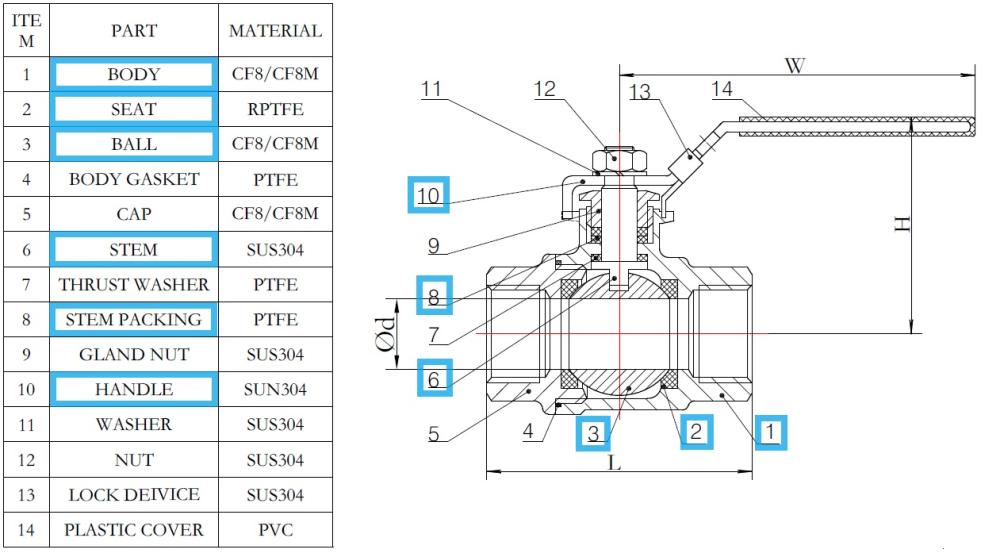
Parts of a Two Piece Ball Valve
The main components of a 2 piece ball valve include the body, seats, ball, stem, packing, seals, and handle. The body contains the internal parts; the seats hold the ball in place and ensure a tight seal; the ball rotates and has a bore, the stem connects the ball to the handle, the seals and packing around the stem prevent leaking, and the handle is used to operate the valve.
➤ For a detailed breakdown of valve components and their functions, see our Ball Valve Parts and Components guide.
- Body: The external casing that houses all the internal parts and has the connection ends through which the fluid enters and exits.
- Seats: Sturdy rings that hold the ball in place and prevent leaking.
- Ball: A spherical ball with a hole or bore through its center. The ball rotates, aligning the bore with the flow for open and turning 90 degrees to close the flow.
- Stem: The valve stem is a rod that joins the ball to the handle, allowing the handle to rotate the ball.
- Packing: Centers the stem, holds it in place, and provides a secondary seal.
- Handle: A lever used to manually operate the valve, turning a 90-degree quarter turn to the open and closed positions.
2 Piece vs 1 Piece Ball Valves
Two piece ball valves feature a full port design that allows for maximum flow with minimal pressure drop, while one-piece ball valves typically have a reduced port and a more compact body. Two piece valves are preferred in applications where flow efficiency is important, while one-piece valves are often used where space and cost are the main considerations.
➤ For a detailed comparison of construction, flow characteristics, serviceability, and application suitability, see our 1 Piece vs 2 Piece Ball Valve guide.
2 Piece Ball Valve vs 3 Piece:
Both 2-piece and 3-piece stainless steel ball valves are commonly used in industrial piping systems, but the two piece design is generally more compact and cost-effective for applications where frequent servicing is not required. The difference between these two types of valves is found in the number of body sections that connect to form the valve. The number of body sections will determine the ease of disassembly, the valve's size, and, consequently, its cost. The 2-piece will be smaller and less expensive, and the three-piece will be larger and easier to take apart.
A Two Piece Valve has a body made of two sections, each with a threaded end. It is durable, easy to use, and cost-effective. In most applications, they require little to no service. However, when cleaning or maintenance is required, the valve will need to be removed from the application.
A Three Piece Valve has three body sections that form the valve. The three sections are comprised of two threaded connection ends and a main body. This three-piece design means the entire valve does not need to be removed from the application for cleaning or repair; only the main central body will be removed from the pipeline.
➤ For a complete comparison, see our 2 Piece vs 3 Piece Ball Valve guide.
2 Piece Ball Valve Categories
Our 2 piece full port stainless steel ball valves are available in configurations based on material, construction, and pressure rating:
By Material
- 304 Stainless Steel Ball Valves – general purpose valves for standard industrial applications
- 316 Stainless Steel Ball Valves – corrosion-resistant valves for harsh environments
By Construction
- Heavy Duty 2 Piece Ball Valves – reinforced construction for demanding applications
By Pressure Rating
- 2000 PSI Ball Valves – high-pressure full port valves
- 3000 PSI Ball Valves – extreme pressure applications
Frequently Asked Questions
What is a two piece ball valve?
A two piece ball valve is constructed from two threaded body sections, allowing the internal ball and components to be assembled more easily. This design supports a larger internal opening, which is why most 2-piece valves are full port and allow higher flow compared to compact valve designs.
What does full port mean in a ball valve?
A full port ball valve has an internal opening that closely matches the pipe size, allowing fluid to pass through with minimal restriction. This helps maintain flow efficiency and reduces pressure loss within the system.
Full port vs reduced port?
The difference comes down to the bore size inside the valve. A full port design keeps the internal opening in line with the pipe size, helping maintain flow through the system. A reduced port design uses a smaller bore, which can introduce some restriction and may affect flow characteristics in certain setups.
Where are two piece ball valves typically used?
These valves are commonly installed in systems that handle water, oil, gas, or air, where dependable shut-off and consistent flow are important. They are used across industrial setups, equipment connections, and general piping systems.
Can a two piece ball valve be taken apart?
Yes, the two piece construction allows the valve body to be separated, making it possible to access internal components for cleaning or replacing worn parts such as seats and seals.
What is a threaded ball valve?
A threaded ball valve connects to piping using screw-type (NPT) connections, allowing it to be installed or removed without welding. This makes it a practical option for systems that require easy maintenance or modification.
Their simple operation, full port flow, and durable stainless steel construction make two piece ball valves a practical choice across a wide range of fluid handling systems.
Related Ball Valve Resources
➤ What is a Ball Valve?
Learn how ball valves work, how quarter-turn shut-off valves operate, common valve types, and typical industrial applications.
➤ 304 vs 316 Stainless Steel Ball Valves
Compare corrosion resistance, chemical compatibility, marine performance, and material selection considerations.
➤ Ball Valve Applications
Learn how stainless steel ball valves are used in water systems, oil and gas piping, chemical processing, compressed air systems, food processing, hydraulic systems, and industrial fluid control.
➤ Ball Valve Parts and Components
Understand valve bodies, balls, PTFE seats, seals, stems, handles, and threaded end connections.
➤ Ball Valve Repair and Maintenance
Learn how ball valves are serviced, repaired, inspected, and maintained in industrial applications.
➤ Ball Valve Pressure Ratings Explained
Understand WOG ratings, PSI ratings, pressure-temperature relationships, and pressure derating.
➤ How to Install a Threaded Ball Valve
Learn about NPT thread preparation, PTFE tape use, tightening methods, valve orientation, and leak testing.
➤ Full Port Ball Valve vs Standard Port
Compare bore size, pressure drop, flow restriction, and common industrial applications.
➤ 1 Piece vs 2 Piece Ball Valve
Compare compact reduced-port one-piece valves with two-piece full-port designs.
➤ 2 Piece vs 3 Piece Ball Valve
Learn how valve body construction affects maintenance access, serviceability, and industrial valve selection.
Explore Other Stainless Steel Ball Valve Types
Compare other common stainless steel ball valve designs based on flow characteristics, maintenance requirements, and application needs:
➤ 1 Piece Ball Valves
Compact reduced-port valves designed for general shut-off applications where space and cost efficiency are important.
➤ 3 Piece Ball Valves
Designed for inline maintenance, cleaning, inspection, and servicing without removing the valve ends from the pipeline.
