

Reduced Port (Standard Port) Ball Valves
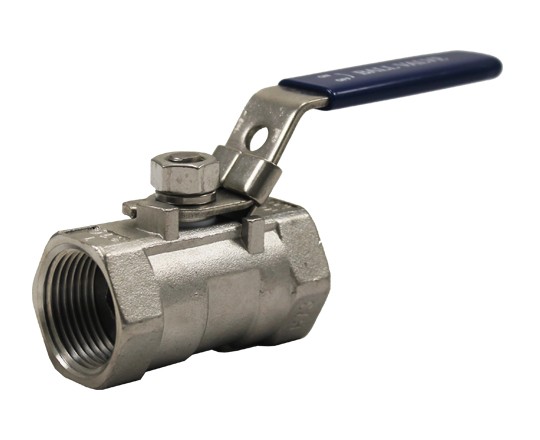
Reduced-port ball valves, also known as standard-port ball valves, feature an internal bore smaller than the nominal pipe size they connect to, making them a more compact and cost-effective alternative to full-port designs. These threaded stainless steel ball valves are commonly used where maximum flow capacity is not critical and where space, weight, and cost savings are priorities. This category includes 1-piece ball valves and mini ball valves, manufactured with a one-piece body construction, female NPT threaded ends, and rated to 1000 WOG for water, oil, and gas applications. Reduced-port (standard-port) valves are ideal for general shut-off, controlled flow applications, and compact installations.
 View All Full Port Ball Valves (2 Piece) for applications requiring maximum flow and minimal pressure drop
Reduced Port Stainless Steel Ball Valves
Reduced port stainless steel ball valves are commonly used in compact piping systems where space, weight, and cost efficiency are more important than maximum flow capacity. These valves provide reliable quarter-turn shut-off using a rotating stainless steel ball with a precision-machined bore that allows fluid to flow when aligned with the pipeline and shuts off flow when rotated 90 degrees.
One-piece stainless steel ball valves offer a compact and cost-effective design compared to multi-piece valve constructions. Their single-body configuration reduces potential leak paths while maintaining dependable shut-off performance in threaded NPT piping systems.
Reduced port stainless steel ball valves are commonly available in mini ball valve and one-piece ball valve designs, both suitable for compact installations and general industrial shut-off applications. For a broader explanation of valve operation, see our What is a Ball Valve? guide.
Reduced Port vs Full Port Ball Valves
Reduced port ball valves offer a compact and cost-effective solution, while full port ball valves are preferred in applications where maximum flow capacity and minimal pressure drop are critical. Choosing between the two depends on whether flow performance or size and cost are the primary considerations.
Note: The terms standard port and reduced port are often used interchangeably. In most cases, a standard port refers to a bore that is one pipe size smaller than the connection size, while reduced port can refer to any bore smaller than the pipe size.
When comparing full port vs standard port ball valves, the key difference is the internal bore size and resulting flow capacity. A full port ball valve maintains the same internal diameter as the pipe, while a standard port or reduced port ball valve has a smaller internal bore. This results in a more compact design with a slight pressure drop, making reduced bore ball valves ideal for general shut-off and space-restricted installations.
For threaded ball valves, two-piece and three-piece designs are generally full port, while one-piece and mini ball valves are commonly standard port or reduced port. Threaded connections are the most common type of connection used on many industrial stainless steel ball valves.
Understanding the difference between full-bore and reduced-bore ball valves helps ensure proper valve selection based on system pressure requirements, allowable pressure drop, and available installation space.
➤ Full Port Ball Valve vs Standard Port
Compare reduced port, standard port, and full port ball valves, including bore size, flow restriction, pressure drop, and common industrial applications.
Common Types of Reduced Port Ball Valves
Reduced port stainless steel ball valves are commonly manufactured in compact body designs suited for threaded piping systems where space, weight, and cost efficiency are important considerations. When it comes to threaded ball valves with a reduced port, the most common types are mini ball valves and one-piece ball valves. Both valve styles use compact body designs that are smaller and lighter than many full-port valve constructions.
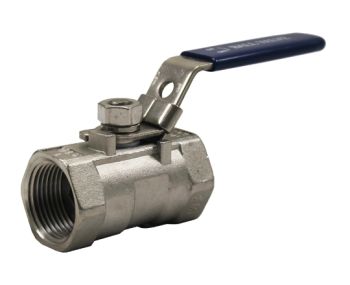
- 1 Piece Stainless Steel Ball Valves – compact single-body valves with a standard or reduced port bore designed for general shut-off applications where cost effectiveness and durability are important.
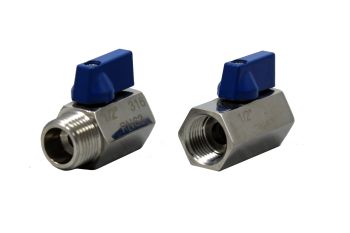
- Mini Stainless Steel Ball Valves – small ball valves designed for tight spaces and small-diameter piping systems where standard valve bodies would be too large.
For more detail on body construction differences, see our 1 Piece vs 2 Piece Ball Valve guide.
Characteristics of a Reduced Port
- Smaller Internal Opening: The smaller bore reduces the effective flow path through the valve.
- Restricted Flow Rate: The smaller internal diameter may reduce maximum flow capacity compared to a full port valve.
- Pressure Drop: The reduced bore may create a slight pressure drop through the valve body.
- Compact Size: A smaller valve body saves space in tight piping layouts.
- Lightweight: Reduced port valves are often lighter than full-port counterparts, making them easier to handle and install.
- Cost-Effective: The smaller body uses less material, which can make reduced port valves a more economical option.
Because pressure rating, seat material, and media compatibility also affect valve selection, review our Ball Valve Pressure Ratings Explained guide before choosing a valve for demanding service conditions.
Applications for a Standard Port
- General Use: Used in general-purpose applications where a high flow rate is not critical.
- Demanding Environments: Used in industrial environments where a compact, durable valve with a long service life is needed.
- Limited Space: Ideal for applications where available installation space is limited and a larger valve body may not fit.
- Moderate Flow Control: Suitable for systems where lower or moderate flow rates are acceptable.
Reduced port stainless steel ball valves are commonly used in water systems, oil lines, compressed air systems, utility piping, general industrial shut-off, compact equipment, and space-restricted installations. For broader application guidance, see our Ball Valve Applications guide.
Why Choose a Reduced Port Standard Port Ball Valve
Reduced port ball valves are often preferred in compact industrial systems where a standard port design provides reliable shut-off performance without the cost or size of a full bore valve.
Reduced-bore ball valves are commonly selected for applications where maximum flow capacity is not required. Their compact body design makes them well suited to installations where space is limited, while their reduced size can help lower weight and cost. In threaded ball valve installations, reduced port designs are frequently used for water, oil, gas, compressed air, and general industrial systems where moderate flow and compact installation are preferred.
For installation guidance, including NPT thread preparation, PTFE tape use, tightening methods, and leak testing, see our How to Install a Threaded Ball Valve guide.
When to Choose a Reduced Port Ball Valve
- Applications where space is limited
- Systems where maximum flow is not critical
- Cost-sensitive installations
- General-purpose shut-off applications
- Compact equipment or small piping layouts
- Moderate-flow water, oil, air, or compatible fluid systems
The most common reduced-port stainless steel ball valve design is the 1 Piece Stainless Steel Ball Valve, featuring a compact body and reliable shut-off performance.
Related Ball Valve Resources
➤ What is a Ball Valve?
Learn how ball valves work, how quarter-turn shut-off valves operate, common valve types, and typical industrial applications.
➤ Full Port Ball Valve vs Standard Port
Compare bore size, pressure drop, flow restriction, and common industrial applications for full port and reduced port ball valves.
➤ 1 Piece vs 2 Piece Ball Valve
Compare compact reduced-port one-piece valves with two-piece full-port designs, including flow characteristics, serviceability, and common industrial applications.
➤ Ball Valve Applications
Learn how stainless steel ball valves are used in water systems, oil and gas piping, chemical processing, compressed air systems, food processing, hydraulic systems, and industrial fluid control.
➤ Ball Valve Pressure Ratings Explained
Understand WOG ratings, PSI ratings, pressure-temperature relationships, and pressure derating.
➤ How to Install a Threaded Ball Valve
Learn about NPT thread preparation, PTFE tape use, tightening methods, valve orientation, and leak testing.
➤ Ball Valve Parts and Components
Understand valve bodies, balls, PTFE seats, seals, stems, handles, and threaded end connections.
Shop Reduced Port Ball Valves
Reduced port stainless steel ball valves are commonly available in compact one-piece and mini ball valve designs:
➤ 1 Piece Ball Valves – compact valves for general shut-off applications.
➤ Mini Ball Valves – small valves for tight spaces and small-diameter systems.
